Mediterranean Diet Lunch Ideas That Survive a Working Day
As an Amazon Associate, this website earns from qualifying purchases.
Mediterranean lunch ideas sorted by where you eat them: desk lunches that travel, five-minute lunches at home, and the leftover-into-lunch moves that need no recipe.
On this page 8
This guide is part of Prep and everyday ideas.
Lunch is where Mediterranean eating usually falls apart, and it is not for lack of ideas. Dinner gets cooked because dinner has time around it. Lunch happens in fifteen minutes, often away from your own kitchen, and whatever is easiest wins.
So this page is not a list of recipes. It is a formula plus three sets of ideas, sorted by where you actually are at midday: at a desk with a box you packed, at home with a fridge, or standing in front of last night's leftovers.
The formula, so you can stop deciding
Every lunch below is the same four things:
- A grain or a pulse. Cooked barley, farro, bulgur, brown rice, or a tin of chickpeas, lentils or white beans.
- Something green or raw. Leaves, cucumber, tomato, shredded cabbage, roasted vegetables from a tray you made earlier.
- Something salty or acidic. Feta, olives, capers, lemon, red wine vinegar, tinned fish.
- Olive oil, more than feels reasonable.
That is it. Harvard's Nutrition Source describes olive oil as replacing butter as the primary added fat in this pattern, and the Oldways pyramid puts vegetables, whole grains and legumes in the tier that turns up at every meal. Four components, assembled — no cooking, no recipe, no decision.
If none of those components are in your fridge, the honest answer is that lunch was lost on Sunday rather than at midday. Meal prep is the page that fixes it, and it is deliberately about prepping components rather than finished meals for exactly this reason. For storage choices, see the glass meal prep container guide.
Desk lunches that travel
These are built to be made the night before and eaten cold, out of a box, without a microwave.
Lentil, roast vegetable and feta jar. Cooked green lentils at the bottom, roasted courgette, pepper and red onion on top, crumbled feta and a lemon-and-olive-oil dressing over the lot. It improves overnight, which very few packed lunches do.
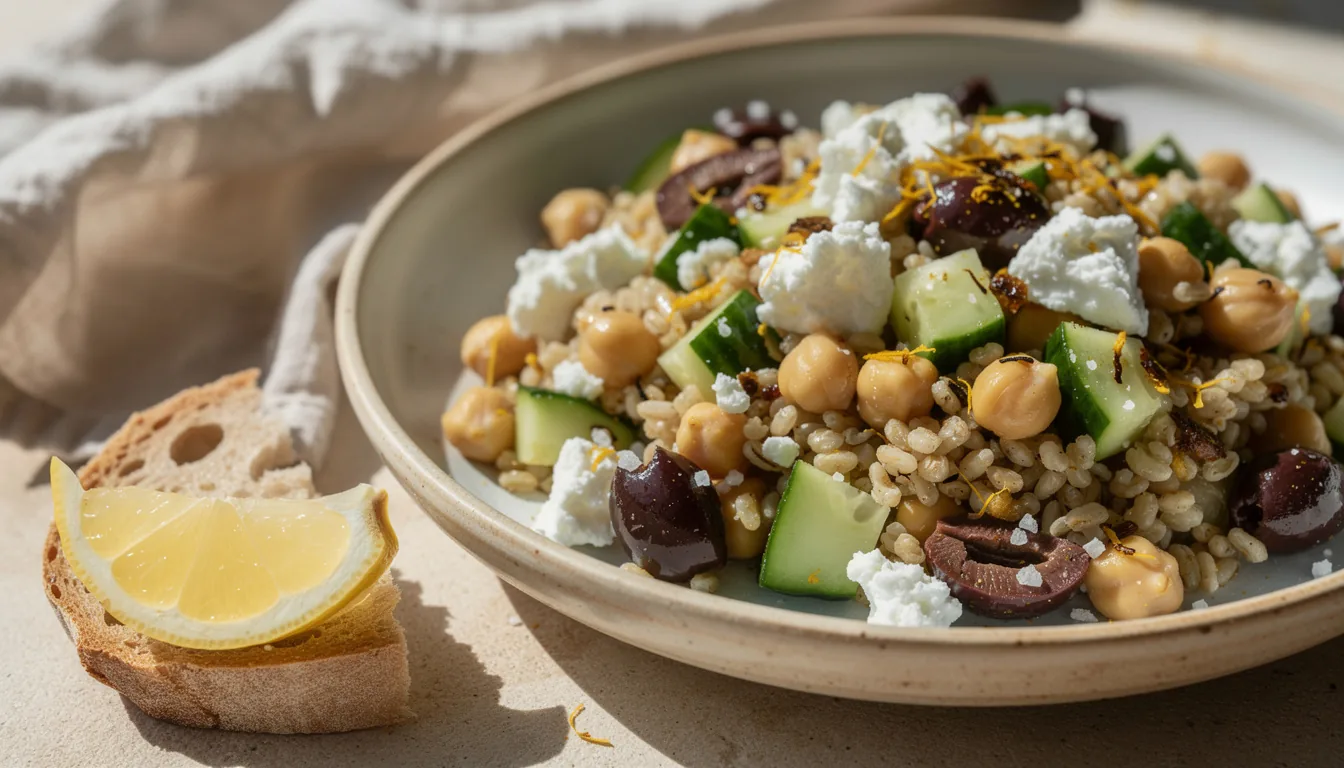
Chickpea, cucumber and herb salad. A drained tin of chickpeas, diced cucumber, halved cherry tomatoes, red onion sliced thin, and as much chopped parsley and mint as you are willing to chop. Dress with olive oil, lemon and salt. Keeps two days.
Tuna, white bean and red onion. A tin of tuna in olive oil, a tin of cannellini beans, thin red onion, parsley, lemon, black pepper. Four minutes, and it covers one of your two weekly fish meals without touching a hob.
Barley or farro with roasted squash and walnuts. Nutty grain, sweet vegetable, toasted walnuts, a little feta, and a dressing sharp enough to cut through it. This is the one that stops a cold lunch feeling like a punishment in January.
Wholegrain wrap with hummus, grated carrot and greens. Hummus as the spread instead of anything mayonnaise-based, grated carrot, leaves, a few olives. Wrap it in paper rather than foil so it does not sweat.
Five-minute lunches at home
Nothing here takes longer than the kettle.
Sardines on toast, lemon, parsley, olive oil. The single most useful lunch in this whole pattern. It is a real meal, it costs very little, and it is fish. A shelf of decent tins — fish, pulses, tomatoes is the cheapest upgrade available to a Mediterranean kitchen.
Mashed white beans on toast. Half a tin of cannellini crushed with a fork, a lot of olive oil, lemon, salt, black pepper, on toasted wholegrain bread. Tomatoes on top if you have them.
Greek salad, made properly. Tomatoes in big wedges, cucumber in chunks, red onion, olives, a slab of feta on top rather than crumbled through, oregano, olive oil, no lettuce. Bread alongside to mop the plate. It is a lunch, not a side.
Fried egg on lentils. Warm a tin of lentils in olive oil with garlic and a little cumin, fry an egg in more oil than you think, put it on top. Runny yolk is the sauce.
Soup from the freezer, upgraded. Any bean or vegetable soup, reheated, then finished with olive oil, lemon and something crunchy — toasted breadcrumbs, seeds, or a torn piece of bread. The finish is what makes it lunch rather than a warm drink.
Turning last night into lunch
The best lunch in this pattern is usually a dinner that was cooked with lunch quietly in mind, which is the habit behind most of our dinner ideas.
- Roast one extra tray of vegetables. They become jars, wraps and grain bowls for three days.
- Cook double the grain. Cold barley or farro is a lunch base; cold rice is a lunch base; neither takes any extra work at the time.
- Make the bean dish that improves. The chickpea, tomato and spinach pan is better on day two, so cook it in a bigger pot than you need.
- Keep a jar of dressing. Olive oil, lemon or red wine vinegar, salt, a crushed garlic clove. It lasts the week and it removes the last excuse.
If you are buying lunch rather than making it
Some weeks the box does not get packed, and pretending otherwise is how people decide they have failed at this. Bought lunch has a version of the same formula, and it is worth knowing before you are standing in a queue at one o'clock.
- A soup plus bread beats a sandwich most days, if the soup has pulses or vegetables in it rather than being mostly cream.
- A falafel, halloumi or grilled-chicken wrap with salad is close to the shape already. Ask for extra salad, and take the sauce on the side if it is mayonnaise-based.
- A supermarket salad plus a tin. A bag of leaves, a pot of olives or feta, and a tin of tuna or beans from the same shop assembles into a real lunch in a minute, and it usually costs less than the ready-made version.
- Bread, olives, tomatoes and cheese from a counter is a legitimate meal, not a snack. It is roughly what a great many people around that sea actually eat at midday.
What to look at rather than the label on the front: whether there is any vegetable in it beyond a leaf of garnish, and whether the protein is a pulse, a fish or a plain piece of meat rather than something reformed. That is the whole check.
Three more, for when you are bored
Roasted vegetable and hummus bowl. Whatever came off the tray, hummus underneath instead of a dressing, seeds on top, lemon over. Filling, and no protein to cook.
Panzanella, the leftover-bread lunch. Stale wholegrain bread torn and toasted, ripe tomatoes, cucumber, red onion, basil, a great deal of olive oil and red wine vinegar. Best made twenty minutes before you eat it, so the bread softens without dissolving.
Yogurt, cucumber and chickpeas. Plain yogurt seasoned with salt, garlic and lemon, chickpeas warmed in oil with cumin spooned over, herbs, and bread to scoop. It sounds like a component list and eats like a meal.
What to leave out
Not banned, just further down the frequency ladder. Processed deli meats, mayonnaise-heavy fillings, and the meal-deal sandwich-crisps-drink pattern all sit in the tier that appears less often rather than daily — foods to limit covers what that means in practice. Nothing gets thrown away; the default just changes.
Where to go next
Lunch works when the components exist, so meal prep is the page that makes this one usable. Breakfast ideas solves the other repeatable meal, snacks covers four in the afternoon, and the 7-day meal plan puts all of it into one week with a single shopping list. If you are still stocking the cupboard, the food and grocery list is the place to start.
This page describes cooking, not care. If you have a diagnosed condition, are pregnant, take medication or manage allergies, talk to a qualified professional who knows your history before changing how you eat — this site has no dietitian on staff, and our medical disclaimer says so plainly.
Get the free 7-day plan and shopping list
Questions people ask
What is a good Mediterranean lunch?
A grain or a pulse, something green, something salty or acidic, and olive oil. That is the whole formula: a jar of lentils with roasted vegetables and lemon, a chickpea salad with feta and herbs, or bread with mashed white beans and tomatoes. None of it needs a recipe once the components are in the fridge.
How do I stop a packed lunch going soggy?
Keep the dressing separate, or dress only the parts that improve by sitting. Grains, pulses and roasted vegetables get better in dressing overnight; leaves, bread and anything crisp do not. Pack the dressing in a small pot, or lay the leaves on top and shake it together when you eat.
Can I eat sandwiches on the Mediterranean diet?
Yes. Bread sits in the base tier of the Oldways pyramid. What usually changes is the filling and the ratio — wholegrain bread, olive oil rather than a mayonnaise-based spread, and vegetables, pulses, tinned fish or a little cheese instead of processed deli meat, which belongs further down the frequency ladder.
Do I have to cook something separate for lunch?
Almost never, and trying to is why most people give up on it. Lunch in this pattern is assembly, not cooking: it comes from a batch of grains, a tray of roasted vegetables and a tin, all of which were made for another reason.
Is tinned fish good enough, or should it be fresh?
Tinned is genuinely good enough, and it is the most practical route to the twice-a-week fish figure that Harvard's Nutrition Source and Oldways both describe. Sardines, mackerel, anchovies and tuna keep in a cupboard and need no cooking at all.
Keep going
- Mediterranean Diet Meal Prep: Components, Not Full Meals
Prep components instead of finished meals: a grain, a pot of beans, roast vegetables, two sauces. Then build a different Mediterranean plate in five minutes.
- Mediterranean Diet Dinner Ideas: 15 Easy Weeknight Meals
Easy Mediterranean dinner ideas built from five repeatable shapes — one pan, one tray, pasta, fish and a big salad — with the version of each that works on a Tuesday.
- Mediterranean Diet Snacks: Grab-and-Go to Make-a-Batch
Mediterranean diet snacks in three tiers: grab-and-go with nothing to make, five-minute plates, and batches like spiced chickpeas, tzatziki and dukkah.
This page is general information about food and cooking, not medical or dietetic advice. Read the full disclaimer.