Mediterranean Diet Snacks: Grab-and-Go to Make-a-Batch
As an Amazon Associate, this website earns from qualifying purchases.
Mediterranean diet snacks in three tiers: grab-and-go with nothing to make, five-minute plates, and batches like spiced chickpeas, tzatziki and dukkah.
On this page 5
This guide is part of Prep and everyday ideas.
The snacks that work are the ones already in the house. Mediterranean-style snacking is mostly olives, nuts, fruit, yogurt, beans and vegetables with something on them, and the only real skill is having the right eight things in the cupboard so that reaching for one takes no thought. Below they are split by effort: grab-and-go with nothing to make, five-minute plates, and batches worth an hour on a Sunday.
Grab-and-go: nothing to make
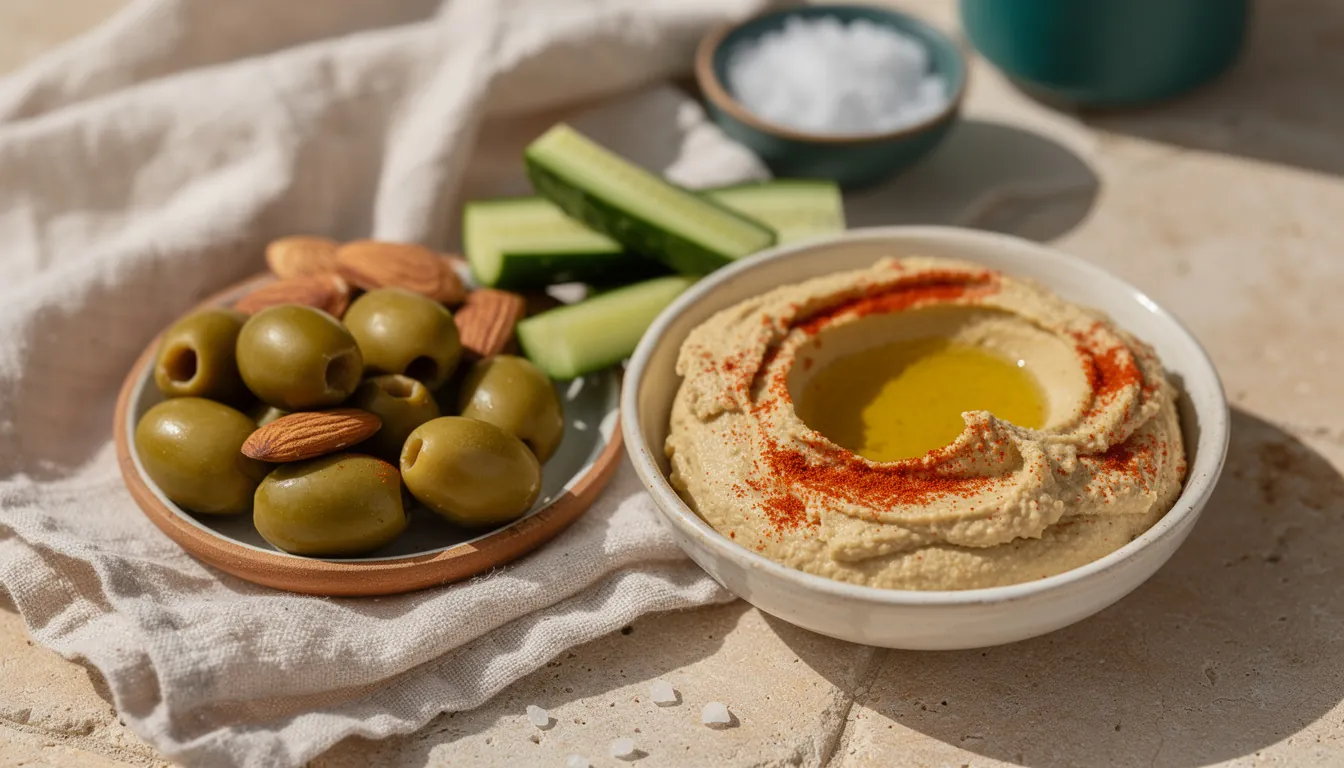
Olives. A small bowl, roughly what fits in a cupped palm. Buy them from a jar or a deli counter with stones in if you can, since they hold their texture better than the pitted tins.
A small handful of almonds or walnuts. The portion is what one hand can close around, not a bowl you keep going back to. Plain or dry-roasted rather than honey-coated. Walnuts and almonds are the two most worth keeping.
Fruit. An apple, a pear, a handful of grapes, two apricots, a wedge of melon. In colder months, two dates or three dried figs do the same job in a smaller package.
A boiled egg. If you cooked six on prep day, this takes no time at all. Salt and black pepper, or a pinch of the dukkah below.
Tinned sardines on wholegrain crackers. One small tin, drained, mashed onto three or four crackers with lemon and black pepper. This is the most substantial thing on the list and the one that reliably gets you to dinner. It also puts a dent in the fish target: Harvard's Nutrition Source and Oldways both put fish and seafood at least twice weekly, and tinned counts.
Yogurt, plain, from the tub. A small pot with nothing added is a perfectly good snack and takes zero preparation.
Five minutes with a knife
Hummus with cucumber and pepper strips. Two heaped spoonfuls of hummus, half a cucumber cut into batons and half a red pepper sliced. A slick of olive oil and a pinch of paprika on the hummus makes it taste made rather than bought.
Yogurt with cinnamon and walnuts. A small pot of thick plain yogurt, a good pinch of cinnamon, a small handful of chopped walnuts, and honey only if the fruit was not sweet enough.
Tomatoes with olive oil and oregano on toast. A slice of toasted wholegrain bread, chopped ripe tomato, plenty of extra-virgin olive oil, dried oregano and salt. Ten seconds of assembly for something that tastes like a holiday.
Feta with cucumber and mint. A thumb-sized piece of feta broken over sliced cucumber, torn mint, olive oil, black pepper.
Apple slices with almond butter. One apple, a spoonful of almond butter. Not traditional in the slightest, and it works.
Bread torn into oil and dukkah. A slice of good bread, a shallow dish of olive oil, and a spoon of the dukkah below to dip through. This is a snack that makes people slow down, which is part of the point.
Make a batch on Sunday
These four cover a fortnight of afternoons between them, and all four fit into the same session as the components in Mediterranean diet meal prep.
Roasted spiced chickpeas. Drain and dry two tins of chickpeas thoroughly on a tea towel, toss with olive oil, salt, cumin and smoked paprika, and roast at 200°C / 400°F for 35 to 40 minutes, shaking the tray twice, until they rattle. Cool completely before storing or they go soft. Keep them in a jar with the lid loose, not airtight, and eat them within two or three days while they are still crisp.
A tub of tzatziki. Coarsely grate half a cucumber, salt it, leave it 15 minutes in a sieve and then squeeze the water out with your hands. Stir into thick Greek yogurt with a crushed garlic clove, chopped dill or mint, lemon juice and olive oil. Plan for two days. It is a dip, a sauce for grilled fish and a spread for bread, so it rarely lasts that long anyway.
Marinated feta and peppers. Cube a block of feta into a jar with strips of roasted red pepper, a strip of lemon peel, a few peppercorns, dried oregano and a chilli flake or two, then cover with olive oil. Keep it in the fridge and let it come to room temperature for ten minutes before eating, since cold olive oil goes solid. Plan for four to five days, and use the leftover flavoured oil for dressing.
A jar of dukkah. Toast a handful of hazelnuts or almonds, a spoon of sesame seeds, a spoon of coriander seeds and a teaspoon of cumin seeds separately in a dry pan until they smell nutty, then pulse coarsely with salt and black pepper. It should stay gritty, not become a paste. Keep it in a jar in the cupboard for a month. Dukkah goes on bread with oil, on yogurt, on eggs and over roast vegetables, which is why it earns a place among your standing cupboard basics.
Those fridge lives are cautious planning figures, not authoritative food-safety guidance. Use your own judgement and follow your own local food-safety advice, and throw out anything that smells or looks off.
What makes a snack actually work
The snacks that hold you until dinner have two things in them: something with protein or fat, and something with fibre. Nuts and an apple. Hummus and raw vegetables. Yogurt and a handful of walnuts. Sardines and a wholegrain cracker. A snack that is only one of the two, like a few crackers on their own or a piece of fruit eaten in thirty seconds on the way out the door, tends to leave you back in the cupboard twenty minutes later.
That is a practical observation about staying full, not a claim about anything else. The other half of it is simply where the food is. If the almonds are in a jar on the counter and the biscuits are in a cupboard you have to open, you eat almonds. Standing at an open fridge deciding is where most afternoons go wrong, so do the deciding on Sunday.
Portion guidance here is deliberately physical rather than numeric: a small handful, a cupped palm, a thumb-sized piece, two spoonfuls. Those are easier to carry in your head than any number and they adjust themselves to the size of the person holding the hand.
Where this fits in the day
Snacks are a support act. If you need three of them a day, the meals either side are probably too small, and the fix is at lunch rather than in the cupboard. Two on a long day and none on a short one is a normal pattern.
For the rest of the day, Mediterranean diet breakfast ideas covers mornings and the 7-day Mediterranean diet meal plan puts dinners in order. To get the cupboard right in the first place, work through the Mediterranean diet food and grocery list, and see foods to limit on the Mediterranean diet for the other side of it. If the shopping is the sticking point, Mediterranean diet on a budget is the page to read. The jars, tins and small equipment that make batch snacks easy are on the kit page.
If you have a diagnosed condition, are pregnant, take regular medication or manage food allergies, read the medical disclaimer and speak to a qualified professional before changing how you eat.
Get the free 7-day plan and shopping list
Questions people ask
How big should a Mediterranean snack be?
Think in physical terms rather than numbers. A small handful of nuts, a couple of spoonfuls of hummus with a few vegetable strips, one piece of fruit, a thumb-sized piece of cheese. If you are still hungry twenty minutes later the snack was too small, and if you are not hungry at dinner it was too big.
Are nuts fine every day?
Nuts and seeds sit in the everyday base tier of the Oldways Mediterranean pyramid, alongside fruit, vegetables, whole grains and legumes. Plain or dry-roasted rather than heavily salted or honey-coated is the practical distinction, and a small handful is the portion most people mean.
What can I keep at my desk?
Almonds or walnuts in a jar, a tin of sardines and a packet of wholegrain crackers, a jar of olives, and fruit that survives a bag. Dukkah in a small jar with a bottle of olive oil covers you for bread days.
Is hummus from a tub acceptable?
Yes. Check the ingredients for the oil used, since some tubs are built on sunflower or rapeseed oil rather than olive oil, and taste it before you decide whether making your own is worth it. Homemade takes about five minutes with a tin of chickpeas and a food processor.
What about something sweet?
Fruit is the everyday answer, and dried fruit with nuts covers the stronger version of that craving. Two dates with a walnut pressed into each is the classic. Oldways puts sweets in the less-often tier rather than ruling them out.
Keep going
- Mediterranean Diet Meal Prep: Components, Not Full Meals
Prep components instead of finished meals: a grain, a pot of beans, roast vegetables, two sauces. Then build a different Mediterranean plate in five minutes.
- Mediterranean Diet Breakfast Ideas for Every Kind of Morning
Mediterranean breakfast ideas sorted by the time you have: no-cook bowls and toasts, make-ahead frittata and jars, and hot plates ready in ten minutes.
- Mediterranean Diet Food List and Grocery List: What to Eat, How Often, and What to Buy
The Mediterranean diet food list organised by how often you eat each group — then the same thing as a shopping list, split into a starter shop and a short weekly one.
This page is general information about food and cooking, not medical or dietetic advice. Read the full disclaimer.