Build from plants
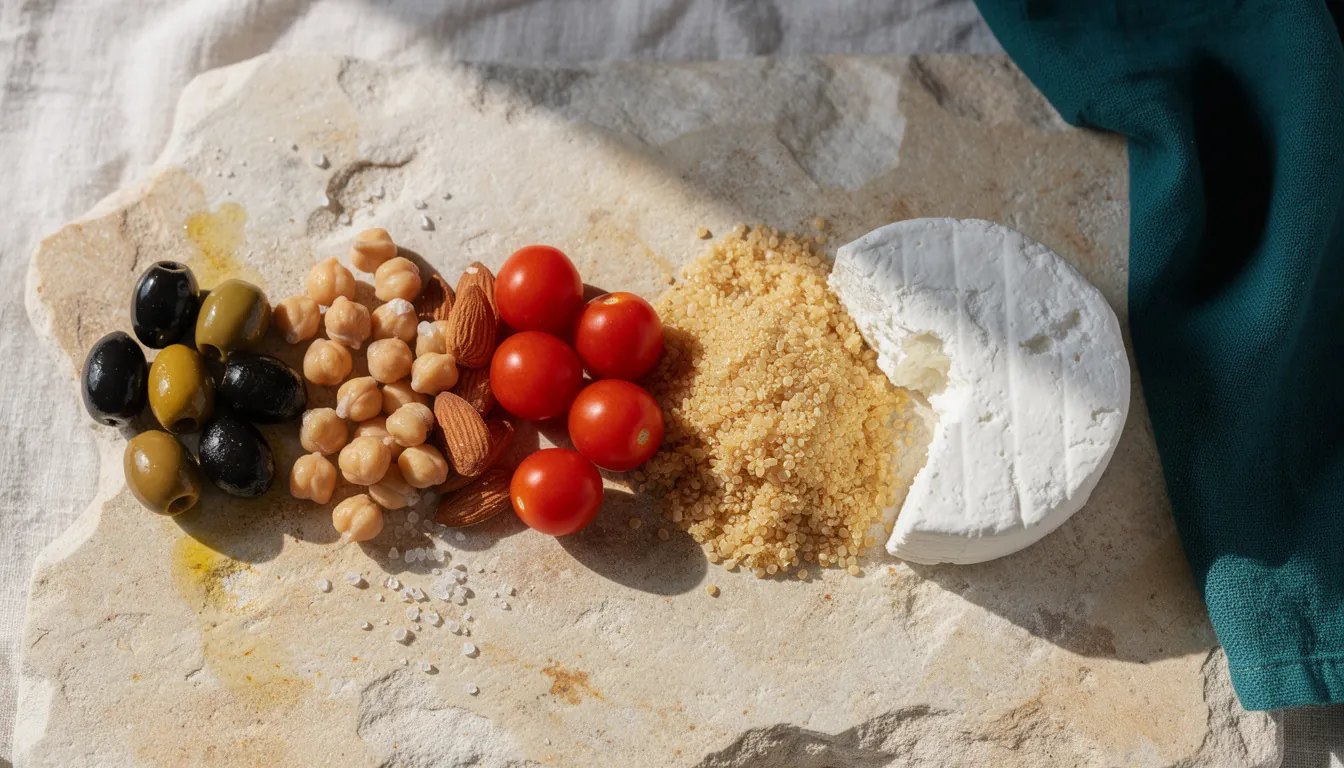
Vegetables, fruit, grains, beans, nuts and olive oil appear in every source's foundation. The exact examples vary, but the structure does not.
Source comparison
A scan-first comparison of what four widely cited organizations actually publish about food groups, frequency and the points where their guidance differs.
Reviewed September 14, 2026
The short version: the four guides agree on the broad food pattern. Their numerical frequencies are not interchangeable. Fish, red meat, olive oil and alcohol are where attribution matters most.
Download the comparison as CSVThe cells below report each publisher's wording or a close plain-language condensation. They do not average different recommendations into a new house target.
| Topic | Oldways | Harvard | AHA | Mayo |
|---|---|---|---|---|
| Everyday foundation | Fruit, vegetables, grains, olive oil, beans, nuts, legumes, seeds, herbs and spices at every meal. | Whole grains, fruit, vegetables, beans, legumes, nuts, herbs and spices daily; olive oil replaces butter and margarine. | Minimally processed plant foods, including fruit, vegetables, grains, potatoes, beans, nuts and seeds; olive oil is the primary fat. | Plant foods and extra-virgin olive oil form the core; Mayo publishes its own one-to-two-tablespoon daily olive-oil figure. |
| Fish and seafood | Often, at least twice weekly. | At least twice weekly. | Eaten more often than red meat; no frequency in the guide reviewed. | Two to three times weekly, favoring fatty fish. This is Mayo's figure. |
| Poultry, eggs and dairy | Moderate portions, daily to weekly. | Cheese and yogurt in small portions, daily to weekly; animal protein in smaller quantities overall. | Poultry more often than red meat; dairy and eggs in low to moderate amounts. | Cheese and yogurt in small portions; no universal schedule is presented here. |
| Red meat and sweets | Meats and sweets less often. | Red meat a few times a month; no separate sweets frequency in the text reviewed. | Red meat less often than fish and poultry; fruit commonly replaces sweets. | Red meat perhaps once weekly or less. This is Mayo's figure. |
| Alcohol | Wine in moderation. | Publishes sex-specific quantities, but those are Harvard's figures rather than a universal rule. | Low to moderate amounts are described, while AHA separately says non-drinkers should not start. | The 2025 guide reviewed does not include alcohol in its core principles. |
Vegetables, fruit, grains, beans, nuts and olive oil appear in every source's foundation. The exact examples vary, but the structure does not.
Every guide places fish or seafood above red meat. Oldways and Harvard publish the same twice-weekly floor; Mayo publishes its own higher range.
A number printed by one organization is evidence of that organization's guidance, not proof that every Mediterranean guide endorses it.
Observed: statements visible in three linked public guides during the September 14, 2026 review. The AHA row was checked against the retained launch research because its page returned HTTP 403 to the direct retrieval used for this update; its public link remains below. Condensed: long passages shortened without changing their direction. Not calculated: no scores, averages, combined frequencies or nutrition totals were created.
This comparison covers practical food-pattern guidance, not the quality of clinical evidence and not advice for any diagnosis or personal circumstance. Publisher pages can change. The review date tells you when we checked them; it does not imply continuous monitoring.
Corrections are logged against the source and review date. If a source has changed or a condensation is inaccurate, use the contact form and include the row and source URL.
For the site's broader editorial process, see how we research.
This resource is general information about food and cooking, not medical or dietetic advice. Read the full disclaimer.