Evidence summary
Mediterranean-style eating and dementia research: what the studies report
What the retired Mayo Clinic expert answer on the Mediterranean diet and Alzheimer's covered, what trials and long-running studies of eating patterns and memory have found since, and where the evidence stops.
Reviewed October 10, 2026
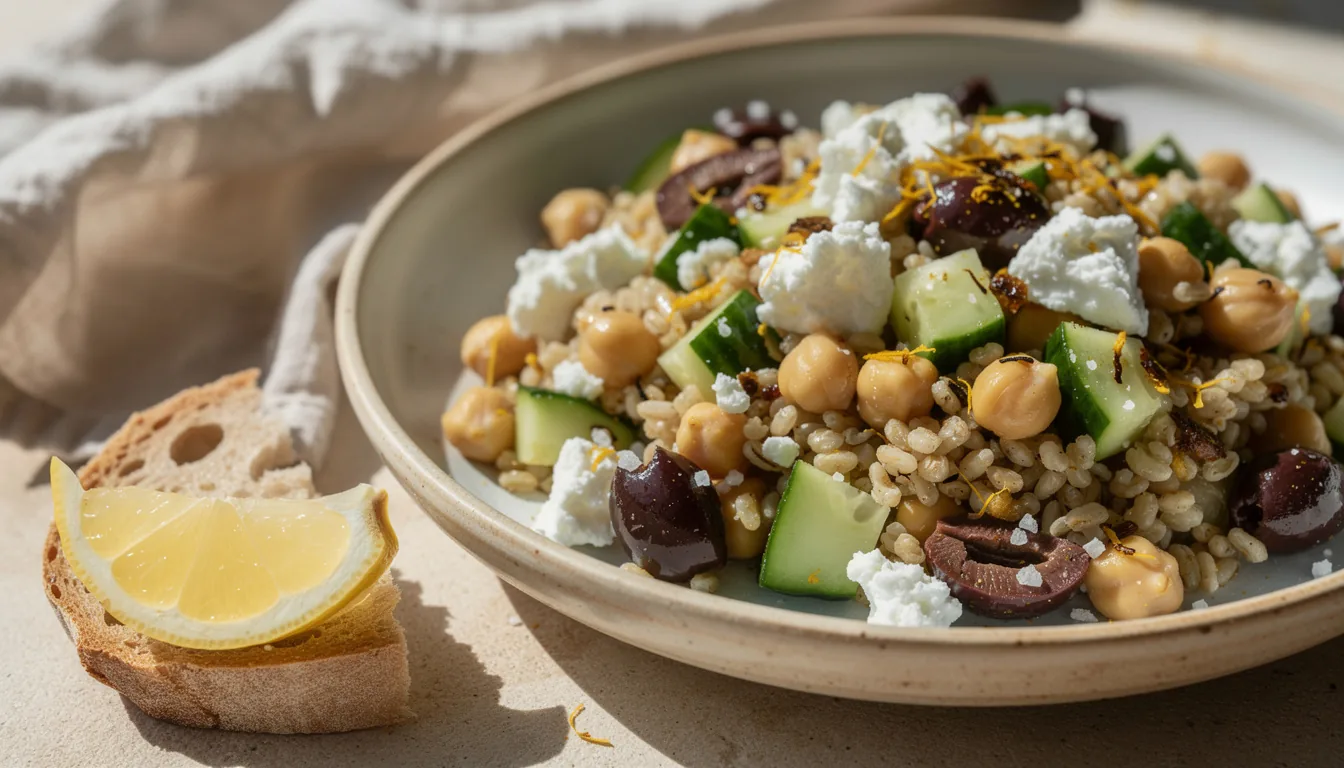
The short version: some long-running observational studies found that people whose diets most resembled a Mediterranean pattern were diagnosed with dementia less often; others found no link. Trials are few and mixed: two Spanish trial analyses reported better scores on some thinking tests, while a 3-year U.S. trial of the related MIND diet found no clear difference from a control diet. The World Health Organization gives the Mediterranean-like diet a conditional recommendation based on moderate-quality evidence.
Diet is not a treatment for dementia or Alzheimer's disease. If you notice memory changes in yourself or someone close to you, see a doctor or other clinician, and don't change or stop any medicine because of something you read here.
What the retired Mayo Clinic answer covered
Mayo Clinic's expert answer "Alzheimer's: Can a Mediterranean diet lower my risk?" was answered by Jonathan Graff-Radford, M.D., and dated April 20, 2019. It is no longer on Mayo Clinic's site. In short, it said:
- studies showed that people who closely followed a Mediterranean diet were less likely to have Alzheimer's disease than people who did not;
- it was unclear which parts of the diet mattered, and researchers had several theories, including effects on cholesterol, blood sugar and blood vessels;
- overall, in its words, "evidence isn't strong enough to show that the Mediterranean diet reduces Alzheimer's disease risk," partly because most diet studies rely on questionnaires that people with memory problems may find hard to answer;
- it described a study comparing the Mediterranean, DASH and MIND diets (listed under long-running studies below);
- it said more research and clinical trials were needed.
Since 2019, larger observational studies and two U.S. trials have been published. They are summarized below, with the older studies, so you can see how the picture has changed.
What health bodies say now
- World Health Organization (2019 guidelines). WHO's recommendation reads: "The Mediterranean-like diet may be recommended to adults with normal cognition and mild cognitive impairment to reduce the risk of cognitive decline and/or dementia." WHO rates the evidence as moderate and the recommendation as conditional, the weaker of its two grades. Its evidence review adds that the Mediterranean diet trials it assessed did not show "a direct effect in reducing the incidence of dementia and/or MCI," though there was moderate-quality evidence of better verbal and visual memory scores.
- U.S. National Institute on Aging. NIA says healthy eating patterns "have been associated with cognitive benefits in studies, but more research is needed," and describes the evidence for the Mediterranean and MIND diets as "mixed." It notes that some, but not all, observational studies link these diets to lower dementia risk. It also says "so far, there is no evidence that eating or avoiding a specific food can prevent Alzheimer's or age-related cognitive decline," and advises talking with your health care provider before starting any dietary change.
- The Lancet Commission on dementia (2024). This expert report lists 14 modifiable risk factors for dementia: less education, hearing loss, high blood pressure, smoking, obesity, depression, physical inactivity, diabetes, excessive alcohol use, traumatic brain injury, air pollution, social isolation, untreated vision loss and high LDL cholesterol. Diet is not one of the 14.
Trials
In a randomized trial, people are assigned to a diet by chance, which is the stronger way to test cause and effect. These are the main trials of Mediterranean-style eating and thinking ability. The figures come from each study's published abstract and describe groups of participants, not what any one person can expect.
| Study | Who took part | What was compared | What it reported | Limits |
|---|---|---|---|---|
| PREDIMED-NAVARRA (Martínez-Lapiscina et al., 2013, Spain) | 522 adults at high vascular risk, average age 74.6 when tested | Mediterranean diet plus extra-virgin olive oil, Mediterranean diet plus mixed nuts, or a low-fat control diet | After 6.5 years, both Mediterranean groups scored higher than the control group on two short screening tests (the Mini-Mental State Examination and a clock-drawing test). The olive-oil group's adjusted difference on the MMSE was 0.62 points. | The abstract reports test scores at the end of the intervention, not change from a starting score. Brief screening tests only. One center of the PREDIMED trial. |
| PREDIMED Barcelona (Valls-Pedret et al., 2015, Spain) | 447 cognitively healthy adults at high cardiovascular risk, average age 66.9 | The same three diets | After a median 4.1 years, the olive-oil group did better than the control group on a frontal (attention and executive function) and a global thinking score, and the nuts group on a memory score. The control group's scores fell on all three. Most single tests showed no difference between groups. | Only 334 of the 447 had follow-up tests. One center. In 2018 the journal published a correction covering this paper, titled "Protocol Deviations and Reanalyses in Derivative Studies of the PREDIMED Trial." |
| MIND diet trial (Barnes et al., 2023, two U.S. sites) | 604 older adults with no cognitive impairment, a family history of dementia, overweight and a less healthy usual diet | The MIND diet (a Mediterranean and DASH hybrid) with mild calorie cutting vs. a control diet with the same mild calorie cutting; both groups got counseling | After 3 years, thinking test scores rose slightly in both groups (0.205 vs. 0.170 standard units). The difference was not statistically significant, and brain MRI measures were similar. | Both groups were asked to change their diet and cut calories, with weight-loss support, so it tests the MIND food list against another reduced-calorie diet, not against no change. It measured test scores, not dementia diagnoses. |
| U.S. POINTER (Baker et al., 2025, 5 U.S. sites) | 2,111 adults aged 60 to 79 at higher risk of cognitive decline, inactive and with a less healthy diet | A structured lifestyle program vs. a self-guided one; both encouraged activity, mental activity, healthy eating, social contact and heart-health checks | Over 2 years, thinking scores rose in both groups, by slightly more each year in the structured group (0.243 vs. 0.213 standard units a year). | Diet was one part of a package, so its own effect can't be separated. There was no group without a program. It measured test scores, not dementia diagnoses. |
None of these trials counted new dementia diagnoses as its main result; all measured scores on thinking tests.
Long-running observational studies
These studies record what people eat and follow them for years to see who is diagnosed with dementia. A hazard ratio below 1 means that group was diagnosed less often during follow-up. It shows an association, not that the diet caused the difference: people who eat differently often differ in other ways too.
| Study | Who took part | What it reported | Limits |
|---|---|---|---|
| Morris et al., 2015 (Rush University, Chicago) | 923 adults aged 58 to 98, followed an average of 4.5 years | People in the top third of a Mediterranean diet score were diagnosed with Alzheimer's disease at a lower rate than the bottom third (hazard ratio 0.46). The same was seen for the DASH and MIND diet scores. The retired Mayo answer described a study with these findings. | Observational: it shows an association, not that diet caused the difference. Diet was reported on a food questionnaire. A small group by the standards of later studies. |
| UK Biobank (Shannon et al., 2023, United Kingdom) | 60,298 adults, followed an average of 9.1 years | The top third on one Mediterranean diet score (MEDAS) had a lower rate of dementia diagnosis than the bottom third (hazard ratio 0.77, 95% CI 0.65 to 0.91). On a second score (PYRAMID) the result was 0.86 (0.73 to 1.02), which is not statistically clear. | Observational. The two ways of scoring the same diets gave results of different strength. |
| Malmö Diet and Cancer Study (Glans et al., 2023, Sweden) | 28,025 adults, median follow-up 19.8 years; 1,943 were diagnosed with dementia | Closer adherence to a modified Mediterranean diet was not linked to a lower rate of dementia (hazard ratio 0.93, 95% CI 0.75 to 1.15) or of Alzheimer's disease (0.90, 0.68 to 1.19). | Observational. Diet was measured at the start, in 1991 to 1996, so later changes in eating were not captured. |
Where the evidence stops
- Association is not cause. The studies that followed people over time found mixed results: the UK Biobank study found a link on one diet score, and the 20-year Swedish study found none.
- Trials measured test scores, not dementia. The differences they found were small, a fraction of a standard unit or under one point on the MMSE screening test, and WHO's review found no direct effect on new cases of dementia or mild cognitive impairment.
- The trial results don't all agree. The two Spanish analyses, both from PREDIMED, reported better scores on some tests; the larger U.S. MIND diet trial did not find a clear difference from a control diet.
- Diet is hard to separate from everything else. In U.S. POINTER, healthy eating was one part of a wider lifestyle program.
- No single food stands out. NIA says there is so far no evidence that eating or avoiding any one food makes a difference to Alzheimer's or age-related cognitive decline.
If you're worried about memory
Diet is not a treatment for dementia or Alzheimer's disease, and nothing on this page is advice to change, stop or delay any medicine or care. If you notice changes in memory or thinking in yourself or someone close to you, make an appointment with a doctor or other clinician. If you are thinking about changing how you eat, NIA's advice is to talk with your health care provider first, who can account for your health history and medical conditions.
About this page and the retired Mayo page
Mayo Clinic's expert answer (mayoclinic.org/diseases-conditions/alzheimers-disease/expert-answers/alzheimers-disease/faq-20058062) now returns a "page not found" error, and many articles still link to it. This page summarizes public sources on the same question: the WHO guideline, the National Institute on Aging, the Lancet Commission and the published studies listed below. It is not written by, reviewed by or connected with Mayo Clinic, and Mayo Clinic has not endorsed it. It was not written or reviewed by a doctor or dietitian. An archived copy of the original answer is linked in the sources.
Method: statements are quoted or closely condensed from the linked sources as read on October 10, 2026. Study figures come from each study's published abstract; no figures were calculated or combined. If a source changes or a summary here is inaccurate, use the contact form and include the section and source.
Sources
- World Health Organization, Risk reduction of cognitive decline and dementia: WHO guidelines (2019) International guideline
- National Institute on Aging, health information page on diet and Alzheimer's disease (content reviewed November 20, 2023) U.S. government health agency
- Livingston G, et al. The Lancet, 2024;404:572-628 (2024 report of the Lancet standing Commission on dementia) Expert commission report
- Martínez-Lapiscina EH, et al. Journal of Neurology, Neurosurgery and Psychiatry, 2013;84(12):1318-1325 Randomized trial (one center of PREDIMED)
- Valls-Pedret C, et al. JAMA Internal Medicine, 2015;175(7):1094-1103 (correction published 2018) Randomized trial (one center of PREDIMED)
- JAMA Internal Medicine, 2018;178(12):1731-1732, Protocol Deviations and Reanalyses in Derivative Studies of the PREDIMED Trial Journal correction
- Barnes LL, et al. New England Journal of Medicine, 2023;389(7):602-611 Randomized trial
- Baker LD, et al. JAMA, 2025 (U.S. POINTER) Randomized trial of a lifestyle program
- Morris MC, et al. Alzheimer's & Dementia, 2015;11(9):1007-1014 Observational cohort study
- Shannon OM, et al. BMC Medicine, 2023;21:81 Observational cohort study
- Glans I, et al. Neurology, 2023;100(1):e28-e37 Observational cohort study
- Mayo Clinic, Alzheimer's: Can a Mediterranean diet lower my risk? (retired expert answer dated April 20, 2019) Archived copy of the original page
For the site's broader editorial process, see how we research.
This resource is general information about food and cooking, not medical or dietetic advice. Read the full disclaimer.