Mediterranean Diet on a Budget: Tinned, Dried and Frozen
As an Amazon Associate, this website earns from qualifying purchases.
How to eat a Mediterranean pattern on a tight budget using tinned fish, dried legumes, frozen vegetables and bulk grains, with a swap table and a cheap week.
On this page 7
This guide is part of Mediterranean meal plans.
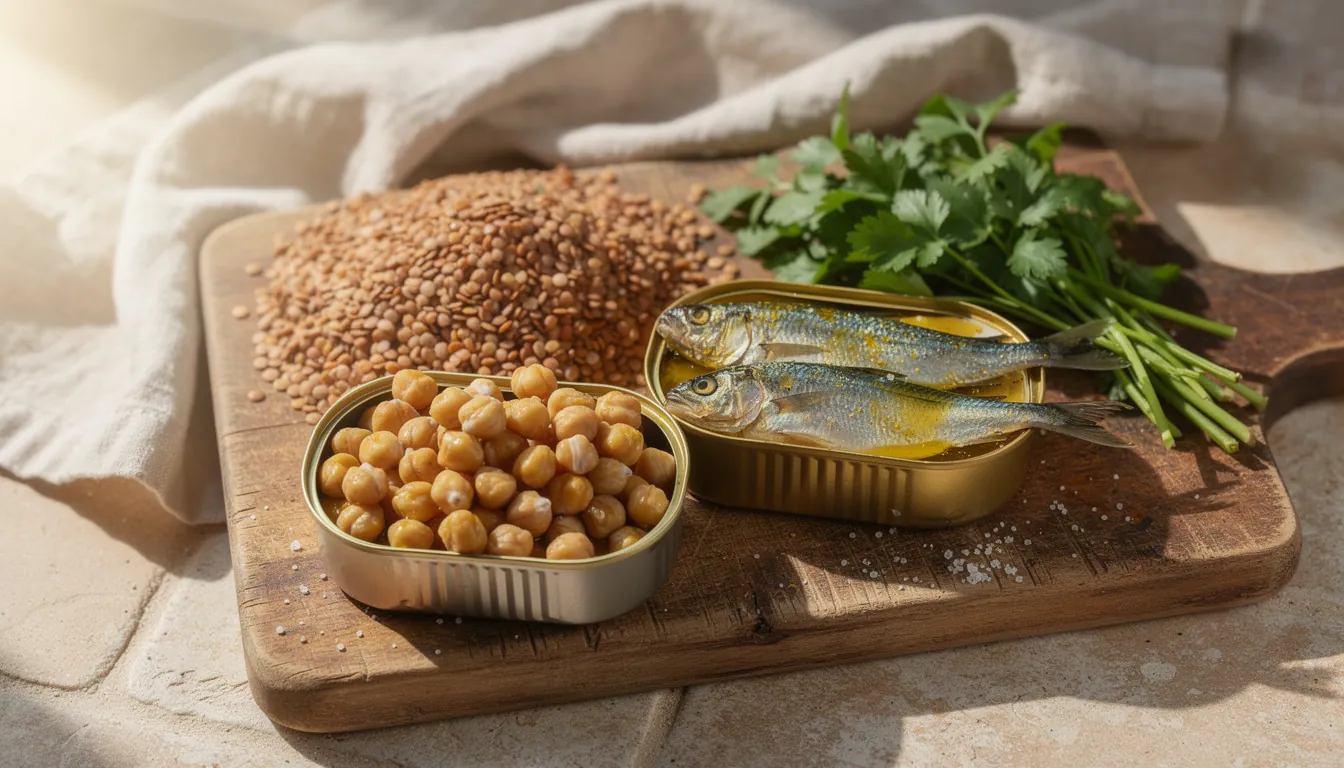
The cheap version of this pattern is not a watered-down version of it. Dried lentils, tinned sardines, frozen spinach, bulk oats, bulgur, onions, tinned tomatoes and olive oil are the actual backbone of Mediterranean home cooking, not the budget substitute for it. What costs money is the fresh fish counter, the imported jars and the out-of-season produce, and none of those are load-bearing. Here is how to run the whole thing from the cheapest shelves in the store.
Start with what the pattern already asks for
The base described by Oldways — fruit, vegetables, whole grains, legumes, nuts, seeds, herbs and healthy oils at every meal — is a list of inexpensive foods. The American Heart Association describes minimally processed plant foods with olive oil as the primary fat and fruit as the usual dessert. Nothing in either description mentions a price, and nothing in either requires anything imported.
The one line that seems to cost money is fish. Harvard's Nutrition Source describes fish and seafood as the preferred animal protein at least twice a week. That is a frequency, not a species. Tinned sardines and tinned mackerel are fish. So is a bag of frozen white fish fillets. Both clear the same bar as a fresh fillet at several times the cost.
The five shelves that carry the whole thing
Tinned fish
Sardines, mackerel and tuna keep for years, need no preparation and cost a fraction of what the same protein costs at the fish counter. Sardines on toast with tomato, red onion and parsley is a real dinner. Tuna with white beans, lemon and olive oil is a real lunch. Pasta with tinned tomatoes, garlic and sardines flaked through at the end is one of the cheapest good dinners there is. Buy tins packed in olive oil if you can, and use the oil in the dish rather than pouring it away.
Dried legumes
A bag of dried chickpeas or brown lentils holds several meals for less than most single fresh items in the cart. Lentils need no soaking and cook in about half an hour. Chickpeas and white beans want an overnight soak and a slow simmer with a bay leaf and half an onion. Cook the whole bag at once, keep what you need for the week in the fridge and freeze the rest in portions. The cooking liquid is stock; do not throw it out.
A tin of chickpeas costs a fraction of the same protein from fish, and a bag of dried chickpeas costs a fraction of the tins. Those two facts together are most of the saving available on this page.
Frozen vegetables
Frozen spinach, peas, green beans and mixed peppers are picked and frozen quickly, cost less than fresh, and do not rot in the drawer while you decide what to cook. Frozen spinach squeezed dry goes into eggs, into rice, into a filling with feta. Frozen peas are the fastest vegetable in existence. Keeping the freezer stocked is what stops a tired Wednesday becoming a takeaway.
Bulk grains
Oats, bulgur, rice and pearl barley bought in the largest bag you have room for are among the cheapest things in the store, and unlike most cheap staples they belong in this pattern. Bulgur in particular is worth knowing: boiling water, twenty minutes, no pan to wash. A cooked grain in the fridge is what turns leftovers into a bowl.
Seasonal vegetables
Buy what is stacked highest and cheapest near the entrance, and cook that. In winter, cabbage, carrots, onions, squash and cauliflower. In summer, zucchini, peppers, tomatoes and eggplant. A recipe that names a specific vegetable is a suggestion; the roasting tray does not care. This single habit — letting the store decide the vegetable, not the recipe — saves more over a month than any coupon.
The swap table
Each row swaps an expensive habit for something that does the same job on the plate.
| Expensive habit | Cheaper equivalent that does the same job |
|---|---|
| Fresh salmon twice a week | Tinned sardines or mackerel once, frozen white fish once |
| Tinned beans every day | A bag of dried beans cooked once a week and frozen in portions |
| Fresh spinach that wilts by Thursday | Frozen spinach, squeezed dry, straight into eggs and rice |
| Bagged salad | A whole head of romaine or cabbage, shredded, dressed at the last minute |
| Chicken breasts | Bone-in thighs, or a whole chicken jointed yourself, with the carcass into stock |
| Pine nuts | Sunflower seeds or chopped walnuts, toasted in a dry pan |
| Shop-bought hummus | Chickpeas, tahini, lemon, garlic, blended — cheaper by a wide margin |
| Fresh herbs bought weekly | A pot of parsley on the windowsill and a jar of dried oregano |
| Balsamic glaze | Red wine vinegar, which is what most of these dishes actually want |
| Feta in small tubs | A whole block in brine, which keeps far longer once opened |
| Out-of-season berries | Frozen berries stirred into yogurt, or whatever fruit is cheapest that week |
| One expensive bottle of oil for everything | An own-brand bottle for cooking, a better one used only for finishing |
The two-bottle rule for olive oil
Most of the olive oil you use goes into a hot pan or a roasting tray, where the delicate character of an expensive bottle is destroyed anyway. Buy own-brand extra-virgin for that. Then buy one better bottle, keep it away from the stove, and use it only where it is tasted raw: over soup at the end, on tomatoes, in a dressing, on bread.
That split gets you the flavour that makes this food worth eating while spending on it only where it registers. The Mayo Clinic Diet describes one to two tablespoons of extra-virgin olive oil a day as part of the pattern; nothing in that framing says both spoons have to come from the same bottle. If you are restocking, a large everyday bottle for cooking plus a small good one is the sensible shape of that purchase.
A cheap week that still clears the frequencies
Two fish nights, two legume nights, one egg night, one poultry night, one free night — none of it dependent on a fish counter.
- Monday: pasta with tinned tomatoes, garlic, chilli flakes and tinned sardines, parsley over the top.
- Tuesday: lentil soup with onion, carrot, celery and tinned tomatoes, finished with olive oil and lemon, bread alongside.
- Wednesday: frozen white fish baked over tomatoes, olives and capers, on bulgur.
- Thursday: the same lentil soup, with a cabbage and carrot salad dressed with lemon and oil.
- Friday: eggs baked in a tomato and pepper sauce with cumin and paprika, bread to mop the pan.
- Saturday: chickpeas roasted hard with whatever vegetable was cheapest, dressed with lemon, over rice.
- Sunday: a whole chicken roasted over potatoes and onions, a large salad, carcass into stock for next week.
Breakfasts across that week are oats or yogurt with cheap fruit. Lunches are last night's dinner. That is the entire shop, and most of it lives in the cupboard already.
What is worth spending on
Not much, but not nothing. A large heavy roasting tray, because a thin one buckles and burns. A pot big enough for a whole bag of beans. Somewhere to put the results — containers that stack and seal mean the beans you cooked on Sunday get eaten rather than found. And a one-time stock of the basics: decent tinned tomatoes, dried oregano that still smells of something, red wine vinegar, a jar of olives. A single proper pantry restock costs once and quietly improves every meal you cook from it afterwards.
For equipment that makes batch cooking easier, compare the best air fryers for Mediterranean cooking and best slow cookers for Mediterranean cooking. Both are optional tools, not requirements for following this pattern.
Spend nothing on supplements, cleanses, branded diet products or anything sold as an accelerator. None of them belong in this pattern, and the foods to limit page covers what genuinely does not.
Where to go next
The full food and grocery list is the general shop for any week. The pantry staples page is the permanent cupboard this all runs from. The 30-day plan builds four weeks from a rotation that is already cheap by design, and the main meal plan page explains the component system underneath all of it.
If you have a diagnosed condition, are pregnant, take medication or manage allergies, talk to a professional who knows your history before making changes — see our medical disclaimer.
Get the free 7-day plan and shopping list
Questions people ask
Is not the Mediterranean diet expensive?
The magazine version is. The actual pattern is built on dried legumes, grains, seasonal vegetables, tinned fish and olive oil, which are among the cheapest things in any store. What makes it look expensive is the imported jars and the fresh fish counter, and neither is required.
Are tinned and frozen foods as good as fresh?
For this pattern they are entirely workable. Tinned sardines, tinned tomatoes, tinned beans and frozen spinach and peas are ordinary staples of Mediterranean cooking rather than compromises, and they let you cook on a night when the fresh produce has run out.
Should I buy expensive olive oil?
Buy two: an own-brand bottle for cooking, which is most of what you use, and a better one used sparingly for dressing and finishing, where you can actually taste it. That gets you the flavour without the cost of using the good bottle in a hot pan.
What is the single cheapest change to make?
Cooking dried legumes instead of buying tins, and putting them at the middle of two dinners a week. It costs a soak and a simmer and it is the biggest per-meal saving available in this pattern.
Does eating cheaply mean missing out on anything?
It means paying attention. MedlinePlus notes that a lower dairy intake can mean less calcium in the day, so keep affordable yogurt in the rotation rather than dropping dairy entirely, and vary the vegetables rather than eating the same two.
Keep going
- Mediterranean Diet Food List and Grocery List: What to Eat, How Often, and What to Buy
The Mediterranean diet food list organised by how often you eat each group — then the same thing as a shopping list, split into a starter shop and a short weekly one.
- Mediterranean Diet Pantry Staples: The 20 to Buy First
The twenty Mediterranean diet pantry staples that make everything else easy, what each one is for, one thing to make with it, and the five to buy first.
- 30-Day Mediterranean Diet Meal Plan You Can Repeat
A 30-day Mediterranean diet meal plan built from a rotating set of components rather than thirty recipes, with four week tables and one new skill a week.
This page is general information about food and cooking, not medical or dietetic advice. Read the full disclaimer.