Mediterranean Diet Dinner Ideas: 15 Easy Weeknight Meals
As an Amazon Associate, this website earns from qualifying purchases.
Easy Mediterranean dinner ideas built from five repeatable shapes — one pan, one tray, pasta, fish and a big salad — with the version of each that works on a Tuesday.
On this page 8
This guide is part of Prep and everyday ideas.
Nobody cooks a cuisine on a Tuesday. They cook a shape they already know, using whatever is in the fridge. So this page is fifteen Mediterranean dinner ideas arranged as five shapes — one pan, one tray, pasta, fish, and a big salad that is actually dinner — with three versions of each.
Learn the five shapes and you stop needing recipes, which is the real goal. If you want the shopping side of this first, the food and grocery list is where the cupboard comes from, and the 7-day plan is these shapes laid out across one week.
Shape 1: the one-pan bean dish
Aromatics softened slowly in a lot of olive oil, a tin of something, a green thing at the end, acid over the top, bread alongside. Twenty minutes, one pan, and it is better the next day.
A saute pan with a lid suits this style of cooking. Choose a base that fits your hob and enough room to stir the beans and greens without spilling.
Chickpeas with tomato and spinach. Sliced onion and three garlic cloves softened in a generous pour of oil, a tin of chopped tomatoes, a drained tin of chickpeas, salt and pepper, fifteen minutes until it thickens. A large handful of spinach stirred in until it collapses, then lemon and more oil. This is the dinner that convinces people.
White beans with greens and lemon. Garlic warmed slowly in oil until gold rather than brown, a tin of cannellini, chopped chard or kale, a splash of water, lemon at the end. Feta crumbled over if you have it.
Lentils with cumin and roasted peppers. Onion and cumin in oil, a tin of green lentils, jarred roasted peppers torn in, parsley and red wine vinegar to finish. Good hot, better cold at lunch tomorrow.
Shape 2: the sheet-pan tray
Everything on one tray, one temperature, nothing to watch. The version that makes weeknight cooking survivable.
Use a rimmed sheet pan with room to spread the vegetables out. Check its outside dimensions against your oven before buying; the rim keeps oil and juices on the tray.
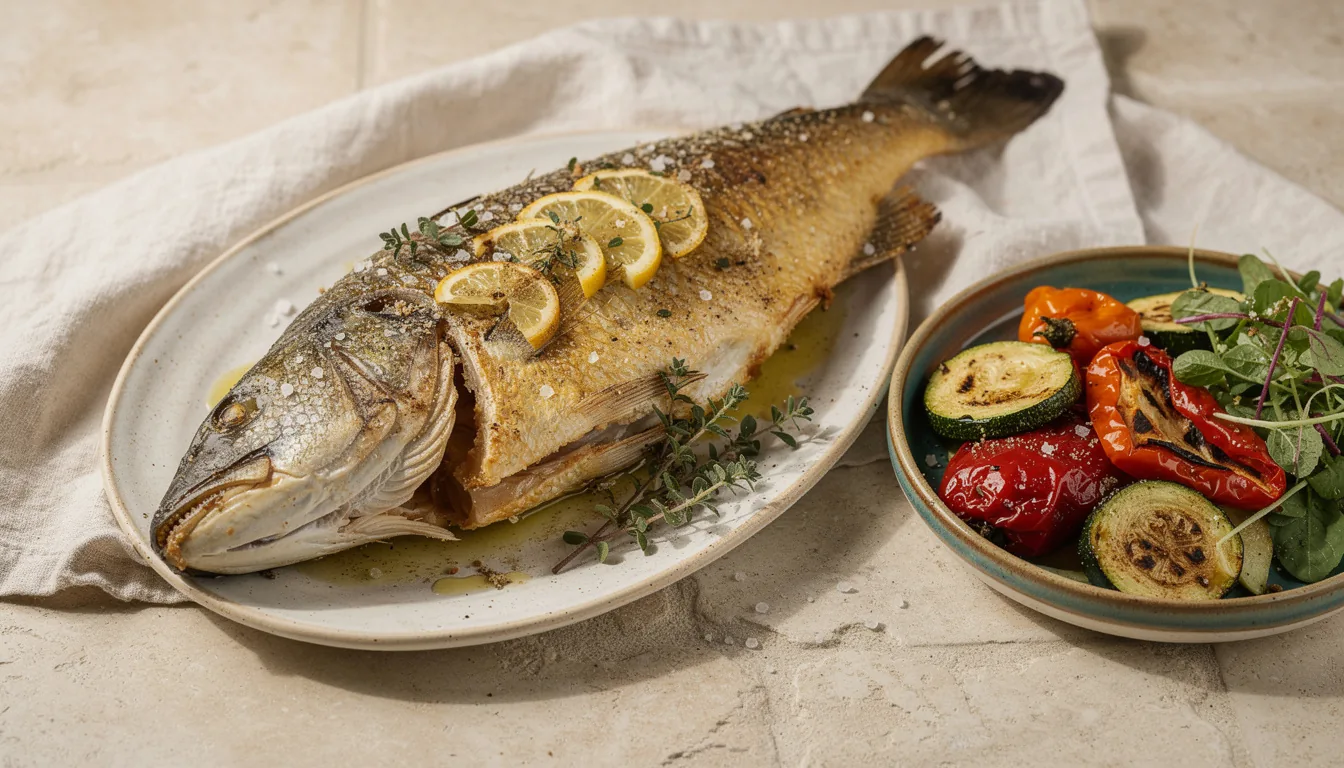
Fish with potatoes, lemon and olives. Halved small potatoes tossed in oil and salt, roasted at 200C for twenty-five minutes, then pushed aside to make room for two fish fillets with lemon slices, olives and cherry tomatoes, and back in for eight to ten minutes until the fish flakes. Works with frozen fillets thawed overnight in the fridge.
Chicken thighs with courgette, red onion and oregano. Bone-in thighs, thick-cut vegetables, plenty of oil, dried oregano, lemon halves roasted alongside to squeeze over at the end.
Whole roasted vegetables with chickpeas and tahini. Aubergine, pepper, red onion and a drained tin of chickpeas, all roasted until the chickpeas crisp at the edges. Tahini loosened with lemon and water, spooned over. This is the one that makes vegetarians of people who did not plan to be.
Shape 3: pasta as a vehicle
Pasta stays in this pattern. What changes is the ratio: it carries beans, greens and oil rather than being the whole plate.
Pasta with white beans and greens. Sliced garlic warmed slowly in a lot of olive oil, a drained tin of cannellini, a bunch of chopped greens, a ladle of pasta water, then the drained pasta tossed through with parmesan and black pepper.
Tuna, tomato and olive. A tin of tuna in olive oil, cherry tomatoes burst in a hot pan, olives, capers, parsley. Ten minutes, and it is one of your two fish meals.
Aubergine and tomato, the long-simmer version. Diced aubergine cooked in more oil than seems sensible until it collapses, tinned tomatoes, garlic, a pinch of chilli, simmered while the pasta boils. Basil and ricotta salata or feta at the end.
Shape 4: fish, twice a week, without a fishmonger
The twice-weekly figure Harvard and Oldways both describe is a cupboard problem, not a shopping problem.
Sardines on toast with lemon and parsley. Four minutes. It is dinner if you put a salad next to it.
Frozen white fish roasted on a bed of tomatoes. Cherry tomatoes, olives and oil in a dish, fish laid on top, twelve to fifteen minutes at 200C. No browning, no flipping, nothing to go wrong.
Prawns with garlic, chilli and bread. Frozen prawns, hot oil, garlic, chilli flakes, lemon, parsley, and bread to get the oil off the plate. Five minutes from freezer to table.
Shape 5: a salad that is actually dinner
A side salad is not dinner. A salad with a grain or a pulse, something salty, and real dressing is.
Greek salad with bread and a boiled egg. Tomatoes in wedges, cucumber in chunks, red onion, olives, a slab of feta on top rather than crumbled through, oregano, oil. No lettuce.
Warm grain salad with roasted vegetables. Barley, farro or bulgur, a tray of roasted vegetables, toasted walnuts, herbs, a lemon dressing sharp enough to cut the grain.
Chickpea and herb salad with yogurt. Chickpeas, a great deal of parsley and mint, cucumber, red onion, lemon and oil, with a spoon of plain yogurt underneath rather than on top.
A fortnight, from five shapes
Fifteen ideas is more than anyone needs. Two weeks of dinners comes out of the five shapes rotated, and it is worth seeing written down because it is far less work than it looks.
Week one. Monday, a one-pan bean dish because Monday needs the easiest thing you own. Tuesday, the sheet-pan tray, cooked large enough that the vegetables carry into two lunches. Wednesday, pasta as a vehicle. Thursday, fish — tinned, on toast, in ten minutes. Friday, whatever the tray and the grain have become, assembled as a salad that is actually dinner. Weekend, anything at all, including a roast or a takeaway, because a pattern measured in months does not care.
Week two. Same five shapes, different contents. The bean dish becomes lentils with cumin instead of chickpeas with tomato. The tray becomes chicken thighs instead of fish. The pasta gets aubergine instead of greens. The fish night becomes prawns with garlic and bread. The salad becomes a warm grain one instead of a Greek one.
Two rules keep the rotation honest. Fish appears twice each week, which is the figure Harvard's Nutrition Source and Oldways both describe. And the vegetable-forward shapes outnumber the meat one, which is the whole difference between this and the way most households cook — poultry sits in Oldways' moderate tier and red meat above it, eaten less often rather than nightly.
Nothing about that is a rule you can break. If Thursday turns into toast, Thursday is toast. The rotation exists so you are not deciding from scratch at six o'clock, and that is the only job it has.
What makes any of these faster
If your prep setup needs an upgrade, the Mediterranean kitchen-tools comparison covers knives, boards, sheet pans and salad-prep tools. For a larger recipe collection, compare three Mediterranean cookbooks.
Every dinner above gets quicker if the components already exist, which is the whole argument of meal prep: cook the grain once, roast the tray once, keep a jar of dressing, keep the four tins stocked. Cook more than you need and tomorrow's lunch is already made.
Two habits do most of the work. Warm the garlic slowly rather than browning it, because burnt garlic is the most common way one of these goes wrong. And finish everything with acid and raw oil off the heat — lemon or vinegar and a last pour of extra-virgin olive oil is what separates a Mediterranean dish from a plain one.
Where to go next
The 7-day meal plan arranges these shapes into a week with one shopping list, the 30-day plan is the version with a longer runway, and on a budget is the honest version when cost is the constraint. If you are starting from nothing, mediterranean diet for beginners has the five swaps and a specific day one.
This page describes cooking, not care. If you have a diagnosed condition, are pregnant, take medication or manage allergies, talk to a qualified professional who knows your history before changing how you eat — this site has no dietitian on staff, and our medical disclaimer says so plainly.
Get the free 7-day plan and shopping list
Questions people ask
What is a typical Mediterranean dinner?
Smaller and simpler than most people expect. A vegetable dish with bread, a bowl of beans finished with olive oil, a piece of fish with something roasted beside it. Meat as the centrepiece is the exception rather than the default — poultry sits in the moderate tier of the Oldways pyramid and red meat sits above it, eaten less often.
What are the easiest Mediterranean dinners for beginners?
The chickpea, tomato and spinach pan, sardines or white fish roasted on a tray with potatoes, and pasta with white beans and greens. All three come out of a cupboard, take about twenty minutes, and use nothing you have to shop specially for.
Can I eat chicken on the Mediterranean diet?
Yes. Oldways places poultry, eggs, cheese and yogurt in the moderate-portions tier, eaten daily to weekly rather than at every meal. In practice chicken tends to become part of a dish with grains, pulses and vegetables rather than a large piece on its own plate.
How do I get fish into dinner twice a week?
Make one of the two tinned. Harvard's Nutrition Source and Oldways both describe fish and seafood at least twice a week, and the Mayo Clinic Diet says two to three times. Sardines on toast counts, tuna through pasta counts, and a frozen fillet roasted on a tray counts.
Do I need to cook something different for the rest of the household?
Usually not. Every dinner shape on this page is assembled at the table rather than plated in the kitchen, so the person who wants more bread, more cheese or a piece of chicken alongside can have it without a separate meal being cooked.
Keep going
- Mediterranean Diet Lunch Ideas That Survive a Working Day
Mediterranean lunch ideas sorted by where you eat them: desk lunches that travel, five-minute lunches at home, and the leftover-into-lunch moves that need no recipe.
- Mediterranean Diet Meal Prep: Components, Not Full Meals
Prep components instead of finished meals: a grain, a pot of beans, roast vegetables, two sauces. Then build a different Mediterranean plate in five minutes.
- 7-Day Mediterranean Diet Meal Plan and Shopping List
A 7-day Mediterranean diet meal plan with breakfasts, lunches, dinners and snacks, plus a complete shopping list ordered by supermarket aisle and easy swaps.
This page is general information about food and cooking, not medical or dietetic advice. Read the full disclaimer.