Mediterranean Diet Grocery List: A Starter and Weekly Shop
A Mediterranean diet grocery list organised by supermarket aisle, split into the one-off starter shop you build once and the short weekly shop you rebuy.
Get the free 7-day plan and shopping list
The fastest way to make a Mediterranean diet grocery list usable is to stop writing one list and write two. A starter shop builds the cupboard once — oil, vinegar, tins, pulses, grains, dried herbs — and a weekly shop rebuys only what actually runs out, which is mostly produce, fish, dairy and bread. That split is why week two is cheaper, shorter and quicker than week one, and why so many people give up in week one without realising they were paying a set-up cost rather than a running cost.
Both lists below are organised by aisle so you can walk the shop in one pass.
The starter shop, aisle by aisle
Buy this once. Most of it lasts months.
| Aisle | Starter shop (buy once) | Roughly how long it lasts |
|---|---|---|
| Oils and vinegars | Extra-virgin olive oil in a large bottle, red wine vinegar | Oil, weeks to a couple of months |
| Tinned and jarred | Chopped tomatoes, chickpeas, cannellini or butter beans, sardines in olive oil, tuna, olives, capers, tahini | A year or more |
| Dry goods | Wholewheat pasta, brown rice, bulgur, farro, dried brown or green lentils, rolled oats, almonds, walnuts, sesame and pumpkin seeds | Months |
| Herbs and spices | Dried oregano, cumin, smoked paprika, bay leaves, black pepper, chilli flakes | About a year, though ground spices fade sooner |
| Chilled | Feta or another firm salty cheese, plain yogurt, eggs | Weeks |
| Produce | Garlic, onions, lemons, potatoes | Weeks in a cool dark cupboard |
| Freezer | Peas, spinach, mixed vegetables, a bag of frozen white fish or prawns | Months |
| Bakery | A wholegrain loaf, half of it sliced and frozen | Frozen, about a month |
Storing it properly is most of the value. Decanting oats, lentils, rice and bulgur into airtight jars and tubs is not decoration, it is how you can see what you own without pulling the cupboard apart, and a basic set of stackable storage containers does more for weeknight cooking than any gadget. If you want the reasoning on which of these items earn their shelf space, that is our pantry staples page.
The weekly shop, aisle by aisle
This is the list you rewrite each week. It is short, because the cupboard is doing the heavy lifting.
| Aisle | Weekly shop | Notes |
|---|---|---|
| Produce | Tomatoes, cucumber, courgette, peppers, aubergine, spinach or other greens, carrots, red onions, fruit for the week | Buy what looks good and is in season rather than sticking to a fixed list |
| Chilled | Plain yogurt, eggs, feta, a piece of hard cheese, chicken thighs if you use them | Cheese and yogurt in small portions, as Harvard and Mayo both describe |
| Fish counter or chilled | Two or more portions per person — sardines, mackerel, salmon, prawns, mussels | At least twice a week is the Oldways and Harvard figure |
| Bakery | A wholegrain loaf, or flatbreads | Freeze half on the day you buy it |
| Tinned and jarred | Whichever tin you emptied, usually tomatoes or chickpeas | Rebuy one or two, not the whole shelf |
| Oils and vinegars | Olive oil, if the bottle is low | Mayo's one to two tablespoons a day is a useful gauge |
| Freezer | Top up frozen peas or spinach | Nothing here belongs on a weekly loop by default |
Notice what is not on the weekly list: no dried herbs, no grains, no pulses, no vinegar, no tahini. That is the whole point of the starter shop.
Fresh, tinned or frozen, and why frozen is not second best
There is a persistent idea that fresh is the real version and everything else is a compromise. It is not true in this style of cooking, and believing it makes the whole thing expensive and fragile.
Buy fresh: salad vegetables and anything eaten raw or barely cooked — tomatoes, cucumber, salad leaves, soft herbs like parsley and mint. Lemons and garlic, always. Fruit you will get through within the week. Fish, when the counter looks good and you will cook it within a day or two.
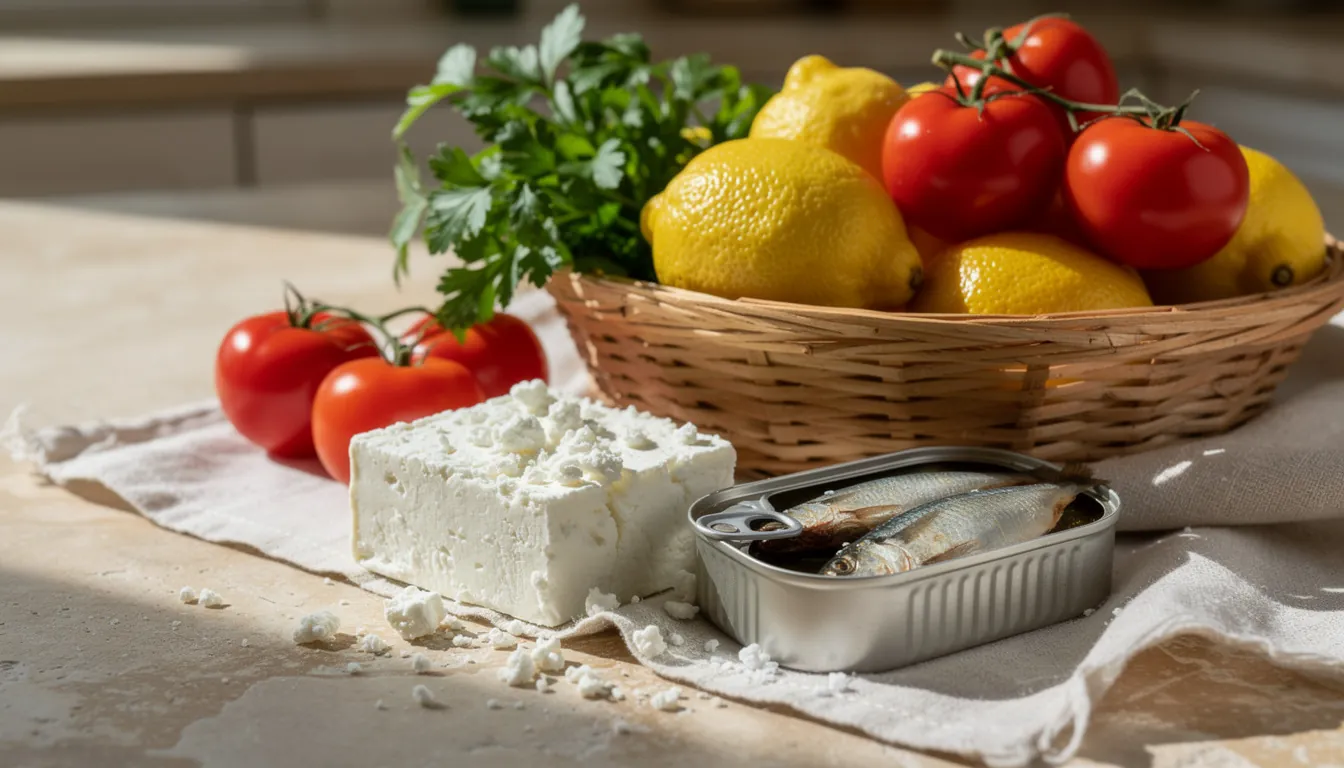
Buy tinned: tomatoes, chickpeas, cannellini and butter beans, sardines, anchovies, tuna, olives, capers. Tinned tomatoes are packed at ripeness and usually make a better sauce than pale winter fresh ones. Tinned sardines in olive oil on toast with lemon and parsley is a four-minute meal, and it is the most practical route to the twice-a-week fish figure that exists.
Buy frozen: peas, spinach, broad beans, mixed vegetables, white fish fillets, prawns. Frozen vegetables are generally picked and frozen fast, and they wait indefinitely without guilt. A bag of frozen spinach wilted into white beans with garlic and olive oil is a real dinner and costs very little.
The honest version is that a cupboard of tins and a freezer drawer are what make the fresh part sustainable. If everything has to be fresh, one badly scheduled week wastes half the shop. For more on holding the cost down without hollowing out the plan, see Mediterranean eating on a budget.
What the trolley is trying to add up to
The proportions are the point, not the individual items. Oldways places fruit, vegetables, whole grains, legumes, beans, nuts, seeds, healthy oils, herbs and spices in the tier eaten at every meal, with fish and seafood often, poultry, eggs, cheese and yogurt in moderate portions daily to weekly, and meats and sweets less often. The American Heart Association describes the same pattern as minimally processed plant foods — fruit, vegetables, breads and grains, potatoes, beans, nuts and seeds — with olive oil as the primary fat, fish and poultry more often than red meat, and fruit as dessert rather than sweets.
Translated into a trolley, the produce aisle plus the tinned and dry aisles should account for most of what goes in. The full tier-by-tier breakdown is on our Mediterranean diet food list.
Five questions to ask before you pay
- Is there enough veg to cover the biggest part of the plate at most meals this week, not just a few sides?
- Are there at least two fish portions per person in the trolley?
- Is there something in there to eat as dessert that happens to be fruit?
- Did anything go in on autopilot that belongs in the limit tier — a multipack of sugary drinks, a stack of ready meals, a pack of deli slices?
- Is the bread wholegrain, and is half of it going straight into the freezer?
None of those are pass-or-fail. They are the five questions that catch the drift.
A note on what a shopping list cannot tell you
A grocery list is a shape, not a prescription. It says nothing about how much you need, what you can afford this month, or what your household will actually eat. MedlinePlus notes one practical detail worth knowing: a pattern with less dairy in it can mean a lower calcium intake, and supplementation is sometimes needed. That is a question for a clinician who knows your history.
If you have a food allergy, a diagnosed condition, are pregnant, or take medication that interacts with food, get advice from a qualified professional before you change your shopping. Our medical disclaimer sets out what this site is and is not.
Where the list goes next
Once the cupboard is stocked, shopping stops being the hard part and the week becomes the hard part. Our 7-day meal plan maps this list onto seven days of eating, the meal plan hub covers longer stretches, and meal prep shows how to cook the grains and pulses once for the week. If you are starting cold, read how to start first, and browse everything else from /browse/.
Questions people ask
Why is the list split into a starter shop and a weekly shop?
Because most of the list is bought once. Oil, vinegar, dried herbs, grains, tins and pulses last months. Once they are in the cupboard, the weekly shop shrinks to produce, fish, dairy, bread and whatever you ran out of.
Is frozen or tinned food a compromise?
No. Frozen vegetables are picked and frozen quickly, tinned tomatoes are usually a better sauce base than out-of-season fresh ones, and tinned sardines and chickpeas are why a Mediterranean-style meal can happen on a Tuesday night.
How much fish should be on the weekly list?
Oldways and the Harvard Nutrition Source both describe fish and seafood at least twice a week, so plan for at least two portions per person. The Mayo Clinic Diet's own figure is two to three times a week, favouring fatty fish.
What is the one thing not to skimp on?
Extra-virgin olive oil, because it goes on nearly everything. The Mayo Clinic Diet suggests one to two tablespoons a day, which is a useful way to judge how fast a bottle should empty.
Do I need a full list again in week two?
Only a short one. The starter shop is a one-off, so week two is usually produce, fish, yogurt, bread and a top-up of whichever tin you used most.
Keep going
- Mediterranean Diet Pantry Staples: The 20 to Buy First
The twenty Mediterranean diet pantry staples that make everything else easy, what each one is for, one thing to make with it, and the five to buy first.
- Mediterranean Diet Food List: What to Eat and How Often
A Mediterranean diet food list organised by how often you eat each group, from vegetables and olive oil at most meals down to red meat and sweets.
- 7-Day Mediterranean Diet Meal Plan and Shopping List
A 7-day Mediterranean diet meal plan with breakfasts, lunches, dinners and snacks, plus a complete shopping list ordered by supermarket aisle and easy swaps.
Back to What to eat, and how often.
This page is general information about food and cooking, not medical or dietetic advice. Read the full disclaimer.